When Your Partner Brushes but Still Has Bad Breath
You love them, they brush, and the breath is still there. Why raising it so often goes wrong, what people on both sides say, and a kinder way to start.

You lean in for a kiss, and there it is again.
You know they brushed this morning. You heard the tap running, you saw the toothbrush in the cup. And still, the breath is there, and you find yourself turning your cheek at the last second, hoping they did not notice.
You have thought about saying something. Maybe you have tried, with a hint about mints or a joke that did not quite land. But every version of the sentence you rehearse sounds the same in your head: you are not clean.
If this sounds familiar, you are far from the only one in this spot. Read through enough threads where partners ask for advice about bad breath and the same story keeps appearing. They love the person. The person brushes. And they have no idea how to bring it up.
This article is for them, and for you. It will not tell you to stay quiet, and it will not hand you a script that makes your partner feel dirty. It will walk through what people on both sides of this conversation say, why the usual approach goes wrong, and a kinder way to start.
"she flosses and brushes"
Here is how one person put it, in a thread where they asked whether they were being petty for wanting to end things:
"That is the odd thing - she flosses and brushes, but still has bad breath anytime we kiss"
Read that again. This is not a partner who does not care. It is a partner who does the work, and a person who loves them and does not know what to do with that.
Others describe the slow slide into avoidance. One person, replying in a thread about a husband's breath, explained where they had landed:
"I gave up on pestering bc it was driving me crazy."
Another, looking back on a long-distance relationship, admitted how long it took to even notice:
"I also noticed it after way too long"
The details change from thread to thread. The feeling does not. You care about the person, you are uncomfortable, and every option seems to cost something. Say nothing, and the distance grows. Say something, and you risk hurting someone you love.
Why the usual approach goes wrong
When people ask for advice on this, the first replies tend to be about hygiene. Is he brushing? Is she flossing? Tell them to brush more. Hand them gum.
Sometimes that is the right question. Some people in these threads describe a partner who really was not brushing, and for them a direct conversation about it was the answer.
But when your partner does brush, that frame turns a health question into an accusation. One reply, to someone asking how to tell a partner, warned:
"if you do bring it up, try to be gentle and don't make it sound like you are saying she has bad hygiene as that could really offend her."
And someone who lives with bad breath themselves explained exactly why it hurts:
"However I'd really only consider it touchy territory if you assume that it's a hygiene thing."
That sentence is worth sitting with. The subject itself is not what makes the conversation so hard. The assumption is. If you go in believing your partner is not clean enough, they will hear it, however gently you phrase it.
What it's like on the other side
It can help to hear from people who are on the receiving end, because many of them are not careless at all.
The same person who wrote about touchy territory described their own situation:
"I'm someone who is insecure about how my breath smells due to health problems that I have no control over."
And then:
"even though I brush, floss, scrape my tongue, etc, several times daily, I still have bad breath a lot of the time."
Another wrote about what it does to them socially:
"I brush and you can tell I brush, ppl tell me to smile more and I don't open my mouth."
Someone else, in a long post asking a dentist for help, described a full routine and the toll it had taken:
"This has totally killed my confidence. I just shut myself at home and dont talk to anybody now."
These are not people who need to be told to brush. They are people who already know, already worry, and already do the work.
That is why so many replies in these threads say some version of the same thing. One put it simply:
"It's not always a lack of hygiene. People that brush and floss daily and see a dentist regularly can still have bad breath."
Another, from someone describing how their own partner's breath turned out to have a dietary cause:
"You could have a great dental routine but still have bad breath for a number of reasons."
And another, in a thread started by a parent asking about a teenager:
"Bad breath isn't always an indicator of unclean teeth."
A kinder way to raise it
So what do you actually say?
The people in these threads who have thought hardest about it come back to the same idea: change the frame from effort to health. You are not telling your partner they are dirty. You are telling them you noticed something, that you know it can happen to people who take good care of themselves, and that you would like to figure it out together.
The person quoted above, who lives with bad breath, offered the most detailed advice:
"Don't claim that you think she has poor hygiene. Even if you mean it in a caring way, and even if it's true, it can easily be taken as an insult."
Instead, they suggested:
"State that you know that there's a variety of conditions that can cause these things and that you're not claiming that it's a lack of effort on her part."
And, perhaps most important:
"That it must be hard having people always assume the worst of you when it's something out of your control."
Others put the balance between honesty and kindness this way:
"Sometimes you have to be direct but there's a kind way of doing it."
One reply to someone whose partner brushes suggested the conversation could start with health rather than habits:
"If he brushes and still has bad breath, I think you should maybe have a gentle talk with him that he might have a dental problem causing it."
One story of saying it kindly
One of the most hopeful posts in these threads is not about a partner but about a friend. The writer could not sit in a car with him because of his breath, and was afraid of losing the friendship. In this case the friend rarely brushed and had not seen a dentist in decades. The writer raised it, left him some dental-care resources their own dentist had given them, and said they would talk again the next day.
Later, when he met someone he wanted to date, he made a dental appointment, and was frightened enough that the writer went with him:
"I went with him cause he was terrified and when he was done he said he didn't know why he had been so scared."
They added that it had not been an issue since, and that the way they had said it mattered:
"I said it the best way he could understand, according to him."
That story is one person's experience, not a promise. But it shows the shape of what tends to go well: say it kindly, make it about health rather than character, and offer to be part of the next step instead of handing over a verdict.
Don't guess the cause
It is tempting, once you have read a few threads, to start diagnosing. Resist that.
The causes people eventually found were all over the place. For one person it turned out to be tonsil stones:
"it turned out to be tonsil stones."
For another, the culprit was something on their plate. Their wife had told them, and they were glad:
"I was super embarrassed, but glad she told me, cause I had no idea"
For them, cutting dairy made the difference. Others named reflux, dry mouth, post-nasal drip, garlic, or a spot nobody could reach at home.
You are not in a position to know which, if any, applies to your partner, and neither are we. That is what a dentist or a doctor is for. If bad breath continues despite good care, it is worth having it looked at, because there may be a cause that only a professional can find. As one reply put it, someone who brushes and flosses and still has bad breath "should go see a doctor to get checked."
So the kindest plan has two parts. First, a check-up, ideally one you offer to go along to. Second, something small and positive you can do together in the meantime, so the conversation ends with a plan instead of a judgment.
Something small to start together
After the hard part of the conversation, it helps to have something concrete to suggest that is not another reminder to brush.
Here is one way to look at it. Brushing, flossing and mouthwash all work by removing things from the mouth. A probiotic is a different kind of step: it adds bacterial strains to the mouth. It does not replace the routine your partner already has, and it does not ask them to do it better. It is simply a different kind of daily step.
That makes it an easy thing to offer without blame. You are not telling your partner to fix something. You are asking whether they would like to try something with you.
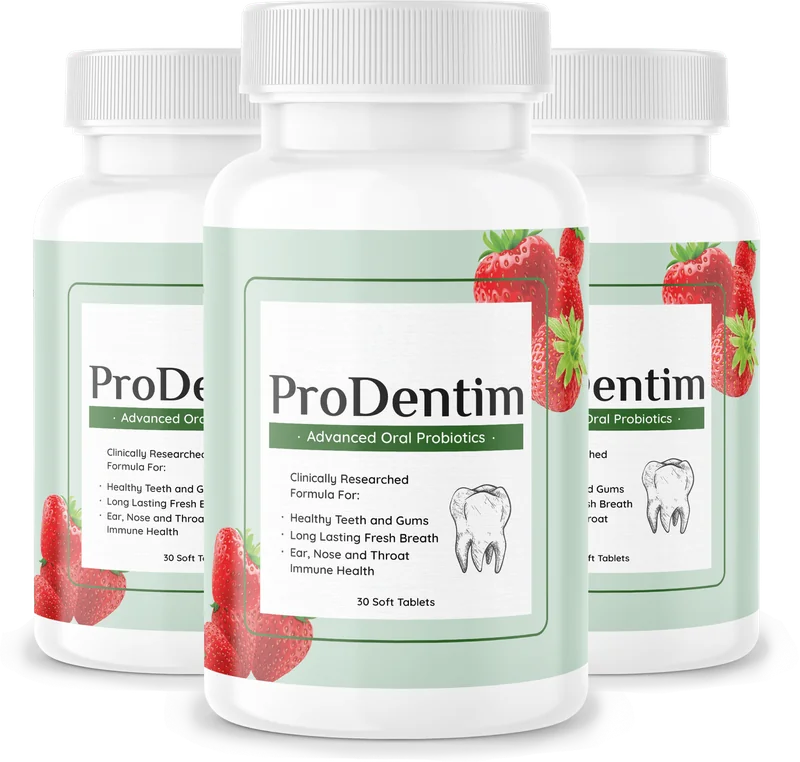
One option is ProDentim, a chewable probiotic tablet made for the mouth. According to its label, each tablet contains three named probiotic strains:
- Lactobacillus paracasei
- B. lactis BL-04
- Lactobacillus reuteri
along with inulin, malic acid, tricalcium phosphate and peppermint. You take it by chewing one tablet slowly each morning.
A few things worth knowing before you look at it:
It is not a replacement for anything. Keep brushing, keep flossing, and book the dentist or doctor visit first.
It makes no promise about breath, and neither do we. Nobody can honestly promise a result for your partner.
It is a one-time purchase, not a subscription. We found no subscription, autoship or repeat billing on the sales page.
There is a refund window. ProDentim comes with a 60-day money-back guarantee. In the maker's words, you "can just return what you haven't used for a full, no question asked refund."
If either of you takes medication or has a medical condition, the maker advises showing a bottle to your doctor before you start, and so do we.
Common questions
Should I just say nothing? Some people in these threads describe where staying quiet led them: giving up, avoiding kisses, or deciding it was all too much. A kind conversation gives both of you a chance that silence does not.
What if my partner gets upset? That can happen, however gently you say it. People who live with bad breath say what they want to hear is that you know it can happen to people who brush, and that you are not questioning their effort.
What if they really aren't brushing? Then that is part of the conversation too, and a direct, kind one is still the best approach. Everything here about health, the dentist and a shared plan still applies.
Will a probiotic fix their breath? Nobody can honestly promise that. What it offers is a simple daily step you can start together, alongside a check-up, and the 60-day refund means you can judge it for yourselves.
The bottom line
Noticing your partner's breath does not make you unkind, and bringing it up does not have to mean calling them dirty. People who brush and floss can still have bad breath, and saying so out loud is often what makes the conversation possible.
Once the conversation is about health and not effort, it helps to have something small and concrete to suggest. Alongside a dentist visit, ProDentim is one chewable probiotic each morning that the two of you can start together, bought once, with 60 days to send back what you haven't used.
At one tablet a day, the six-bottle pack is listed as a 180-day supply, and the page lists free US shipping on the larger packs.
Quotes in this article are taken from public posts on Reddit and are reproduced as written. None of the people quoted here said they used ProDentim, and they did not review or endorse it.
These statements have not been evaluated by the Food and Drug Administration. This product is not intended to diagnose, treat, cure or prevent any disease. If you are pregnant, nursing, taking medication, or have a medical condition, consult your physician before using it. This article is not medical advice. If bad breath continues despite good care, see a dentist or doctor.